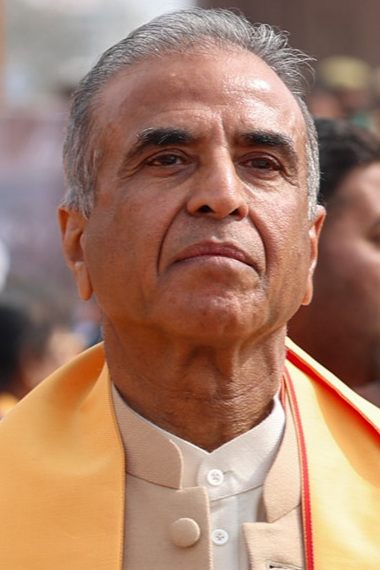
The Making of a Mogul: How Sunil Mittal Built His Billion-Dollar Fortune
The story of Sunil Mittal is a quintessential rags-to-riches narrative, a testament to unyielding vision, strategic pivots, and relentless execution in a rapidly developing nation. From humble entrepreneurial beginnings to commanding a telecom empire that redefined connectivity for millions, Mittal’s journey is as inspiring as his staggering
Sunil Mittal's $6.6 Billion Net Worth: From Bike Parts to Telecom Empire suggests. As the founder of Bharti Enterprises, India's largest mobile phone provider, his influence extends far beyond telecommunications, cementing his status as a titan of Indian industry and a global business leader. This article delves into the critical junctures, strategic decisions, and entrepreneurial spirit that forged the immense fortune of Sunil Mittal.
Humble Beginnings and Early Ventures: Laying the Foundation
Sunil Bharti Mittal’s entrepreneurial journey began not in the glittering boardrooms of multinational corporations, but in the industrial heartland of India. Born in Ludhiana, Punjab, a city known for its manufacturing prowess, Mittal absorbed the spirit of enterprise from a young age. After graduating from Punjab University in the mid-1970s, many would have sought secure employment. Mittal, however, harbored a different ambition: to build something of his own.
His very first business venture was remarkably modest: a bike parts manufacturing company. While seemingly small-scale, this initial foray into manufacturing provided invaluable lessons in production, supply chain management, and understanding market demand – foundational skills that would serve him throughout his career. It was an early demonstration of his willingness to get his hands dirty and understand the mechanics of business from the ground up.
Not content with localized manufacturing, Mittal soon sought broader horizons. He launched Bharti Overseas Trading Company with his brother, a move that signaled his burgeoning global aspirations. This pivotal decision also saw him relocate to Mumbai, India's bustling financial capital. Moving to Mumbai was a strategic masterstroke, placing him at the nexus of trade, finance, and burgeoning opportunities, far removed from the more localized manufacturing environment of Punjab. This phase taught him the intricacies of import-export and the dynamics of international commerce, further broadening his business acumen.
Navigating Setbacks and Strategic Pivots: The Path to Innovation
The journey of any successful entrepreneur is rarely a straight line, and Sunil Mittal's was no exception. His early career was punctuated by both triumphs and significant learning experiences, including a failed attempt to launch an imported generator business. This setback, rather than deterring him, likely sharpened his resolve and refined his approach to market analysis and risk assessment. It underscored a crucial lesson: understanding local market needs and manufacturing capabilities could be more effective than simply importing.
It was this realization that led to one of his most brilliant and impactful pivots. Mittal identified a gaping hole in the Indian market: the absence of locally manufactured push-button phones. At a time when rotary phones were still prevalent, and advanced telephony was largely imported and expensive, Mittal seized the opportunity. He began manufacturing push-button phones in India, making them accessible and affordable for a wider segment of the population. This move was revolutionary. It demonstrated:
*
Market Foresight: Recognizing an unmet demand and a technology gap.
*
Local Manufacturing Prowess: Building capacity in India to produce advanced electronics.
*
Accessibility: Democratizing technology by offering an affordable alternative.
The success of his push-button phone business was phenomenal. It not only generated substantial capital but also established Bharti as a reputable name in electronics manufacturing. This success paved the way for expansion into other telephone accessories, including fax machines and cordless phones, further cementing Bharti's position as a key player in India's evolving communication landscape. This period of focused growth in conventional telephony provided the critical capital, experience, and market understanding that would soon be channeled into an even bigger technological wave.
Riding the Telecom Tsunami: The Birth of Bharti Cellular
The early 1990s marked a transformative period for India, characterized by economic liberalization and a burgeoning appetite for new technologies. Sunil Mittal, with his finger firmly on the pulse of innovation, saw the immense potential of mobile telephony – a technology barely conceptualized in India at the time. This was the moment for his most audacious and ultimately defining move.
In the early 1990s, Mittal launched one of India's very first mobile phone companies. Recognizing the vast technical expertise and capital required for such an endeavor, he forged a crucial partnership with Vivendi, a French mobile company. This strategic alliance was instrumental, blending Mittal's local market understanding and entrepreneurial drive with Vivendi's technological know-how and international experience.
In 1995, Bharti Cellular Limited began offering cell service, a moment that would forever change India's communication landscape. The initial years were challenging, characterized by high tariffs, limited coverage, and skepticism from many. However, Mittal's vision was clear: to make mobile connectivity ubiquitous and affordable. Through aggressive expansion, innovative pricing strategies, and a focus on customer service, Bharti Cellular (which later became synonymous with its flagship brand, Airtel) expanded rapidly. The company transformed from a fledgling startup into the biggest mobile phone provider in India, connecting hundreds of millions across the length and breadth of the country. This monumental achievement is central to understanding
Sunil Mittal's Net Worth Unpacked: The Bharti Enterprises Success Story.
Key to Airtel's success included:
- First-mover Advantage: Entering the market when competition was minimal.
- Aggressive Network Rollout: Investing heavily in infrastructure to expand coverage rapidly.
- Affordability: Continuously driving down call rates and making mobile services accessible to the masses.
- Innovation: Introducing new services and technologies to stay ahead of the curve.
Diversification and Lasting Legacy: The Broader Bharti Empire
Today, Bharti Enterprises, under Sunil Mittal's astute leadership as CEO, is far more than just a telecom giant. It has evolved into a diversified conglomerate with interests spanning a wide array of sectors. While telecom remains its cornerstone, Bharti has strategically expanded into various other domains, showcasing Mittal's belief in diversified growth and seizing new opportunities.
One notable historical diversification was its significant partnership with retail behemoth Wal-Mart in India, focusing on the wholesale cash-and-carry format. While this particular joint venture eventually evolved and separated, it highlighted Bharti's ambition to explore new markets and leverage its logistical and organizational strengths beyond telecommunications. The conglomerate's holdings have included sectors such as:
*
Financial Services: Providing a range of banking and insurance solutions.
*
Real Estate: Developing commercial and residential properties.
*
Agri Business: Engaging in various agricultural ventures, leveraging India's vast agricultural sector.
*
Food and Beverage: Exploring opportunities in the consumer goods space.
This diversification strategy not only mitigates risk but also leverages synergies across different business units, contributing significantly to the overall valuation that comprises Sunil Mittal's net worth. Beyond business, Sunil Mittal is also known for his philanthropic endeavors, demonstrating a commitment to giving back to society through various initiatives focused on education, healthcare, and rural development. This holistic approach to wealth creation and societal contribution further solidifies his legacy.
Conclusion: The Enduring Impact of a Visionary
The journey of Sunil Mittal from a small-town entrepreneur making bike parts to a global telecom mogul with a
Sunil Mittal's $6.6 Billion Net Worth: From Bike Parts to Telecom Empire is a powerful narrative of ambition, adaptation, and an unwavering belief in the power of connectivity. His story offers invaluable lessons for aspiring entrepreneurs: the importance of resilience in the face of setbacks, the courage to pivot when necessary, the vision to identify emerging market needs, and the strategic acumen to forge powerful partnerships.
Mittal didn't just build a company; he helped build an interconnected India, democratizing communication and empowering millions. His commitment to innovation and expansion through Bharti Enterprises continues to shape the economic landscape of India and beyond. The legacy of Sunil Mittal is not merely measured in billions, but in the profound societal and technological transformation he spearheaded, making him a true icon of modern entrepreneurship. To delve deeper into the specifics of his financial success, explore
Sunil Mittal's Net Worth Unpacked: The Bharti Enterprises Success Story.